

Startup CEOs, founders, and entrepreneurs make decisions about legal risks all the time, and in-house legal leaders need to decide where to spend their time and effort to lower the most risk. Legal risks are hard to predict and quantify, and managing them often falls back on gut heuristics rather than hard data.
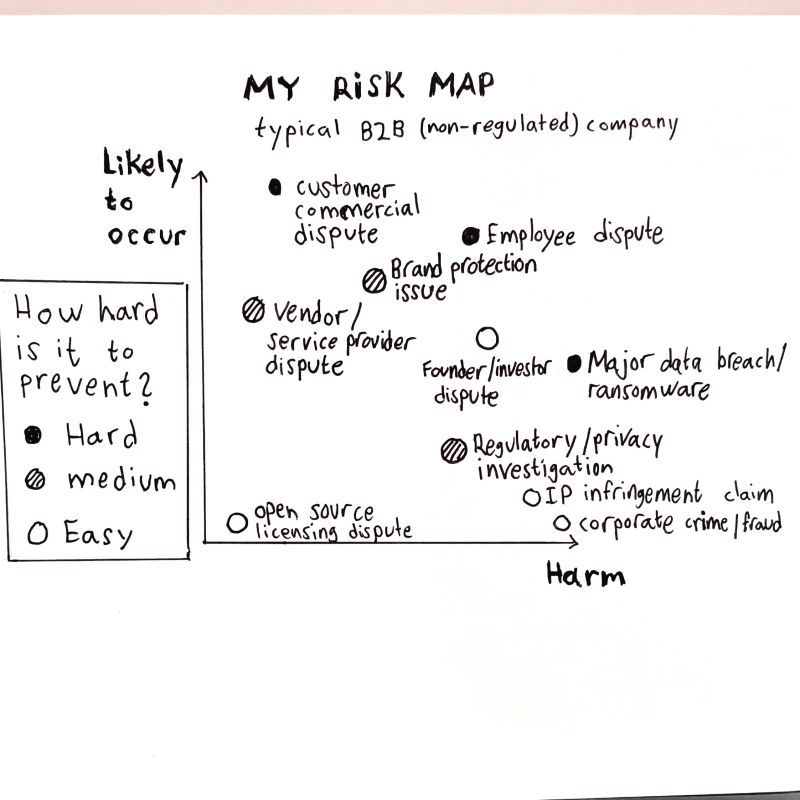
Here’s my gut instinct risk map for a typical B2B (non-regulated) SaaS, software, or services company, the kind of company I spent most of my career in.
Key takeaways:
1. Counsel should be very vigilant against corporate crime, fraud, and IP infringement by the company. A little effort on policies and training mitigates very heavy risks.
2. Customer and vendor disputes are unavoidable and are part of doing business. While the CISO is in charge of preventing data breaches and ransomware, legal is responsible to protect the downside from a major event. After flawless products and consistently top-notch service, good contracts are the company’s next best line of defense when disputes arise. Take contracting seriously.
3. Don’t neglect employment legal. Employee disputes can be extremely costly, time consuming, and harmful to morale and employer reputation. The more employees the company has, the greater the risk. Reducing employment risk requires ironclad employment agreements, constantly updating handbooks and policies, enforcing training, keeping up with complex workplace laws across jurisdictions, and an experienced hand when thorny situations threaten to become full-blown disputes. It’s hard work, but the return on investment is high.
4. Always have appropriate insurance!
Disagree with my risk mapping?
Would you add any risk buckets?
Let me know what you think.